
These definitions are based on how the terms are used in today’s monarchies, especially in Europe. Some of these terms have slightly different meanings in historical, or non-royal contexts or in monarchies outside to Europe.
P
Peerage
The peerage is the highest rung of nobility, consisting of both hereditary and lifetime titles. The peerage just includes the title holders, not spouses or descendants who hold Courtesy titles.
Peerage in the UK:
- Duke/Duchess
- Marquess/ Marchioness
- Earl/ Countess
- Viscount/ Viscountess
- Baron/ Baroness
Post-Nominal Letters
Abbreviations placed after a person’s name to show honors, degrees, appointments, qualifications or affiliations. Examples:
- Honors1: KG (Knight Companion of the Order of the Garter)
- Degrees: PhD (Doctor of Philosophy)
- Appointments: MP (Member of Parliament), ADC (Aide de Camp)
- Qualifications: MD (Doctor of Medicine), OLY (Olympian)
- Affiliations: FRS (Fellow of the Royal Society)
Principality
A type of Monarchy ruled by a Sovereign Prince.
Q
Queen Mother
A title given to a queen dowager who is also the mother of the current monarch (e.g., Queen Elizabeth, The Queen Mother). This is not automatically granted in all monarchies and is mainly used in the UK.
R
Regina
Latin for “Queen”. You will often see “R” used on things like Cyphers to stand for “Regina.” (E.g., EIIR stood for Queen Elizabeth II).
Rex
Latin for “King.” You will often see “R” used in signatures on things like Cyphers to stand for “Rex.” (In the image, the cypher GVIR stands for George VI Rex, AKA King George VI of the UK.)
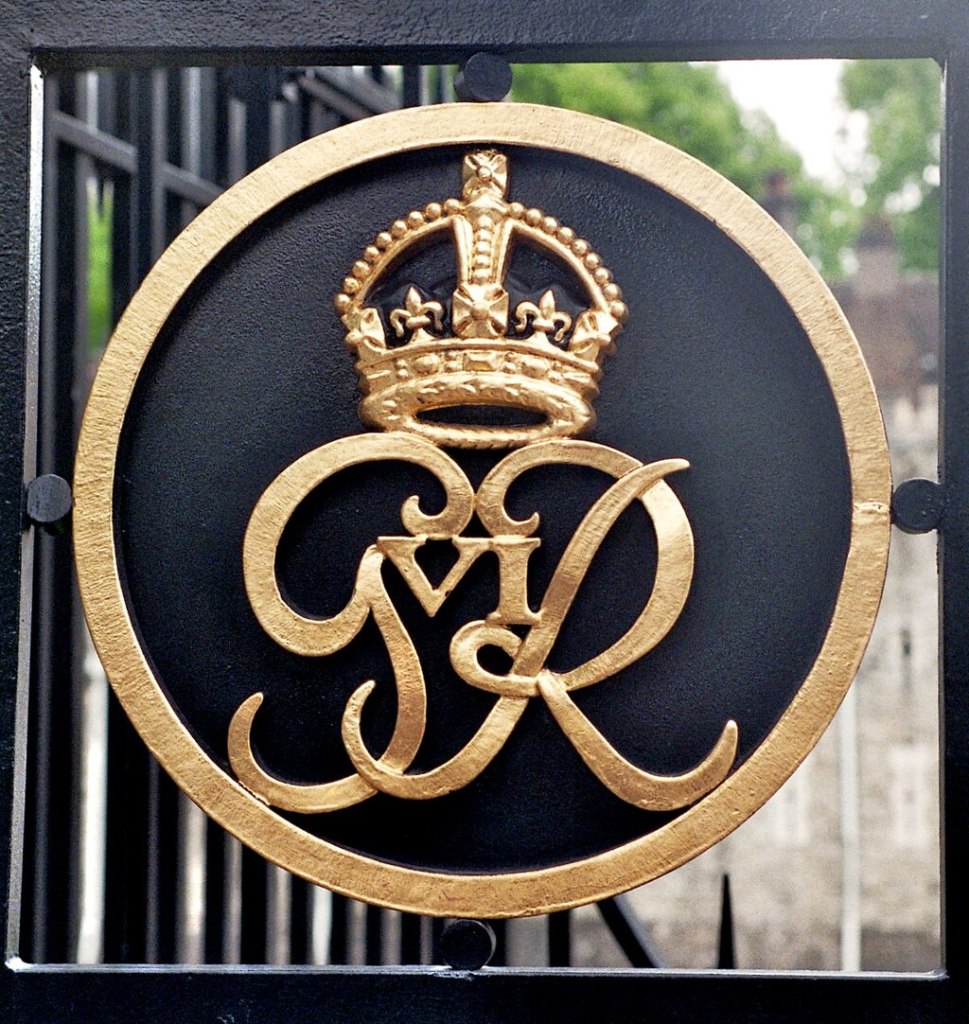
Rabe!, CC BY-SA 3.0, via Wikimedia Commons
- Not every honor/order has post-nominal letters. ↩︎







Leave a Comment!